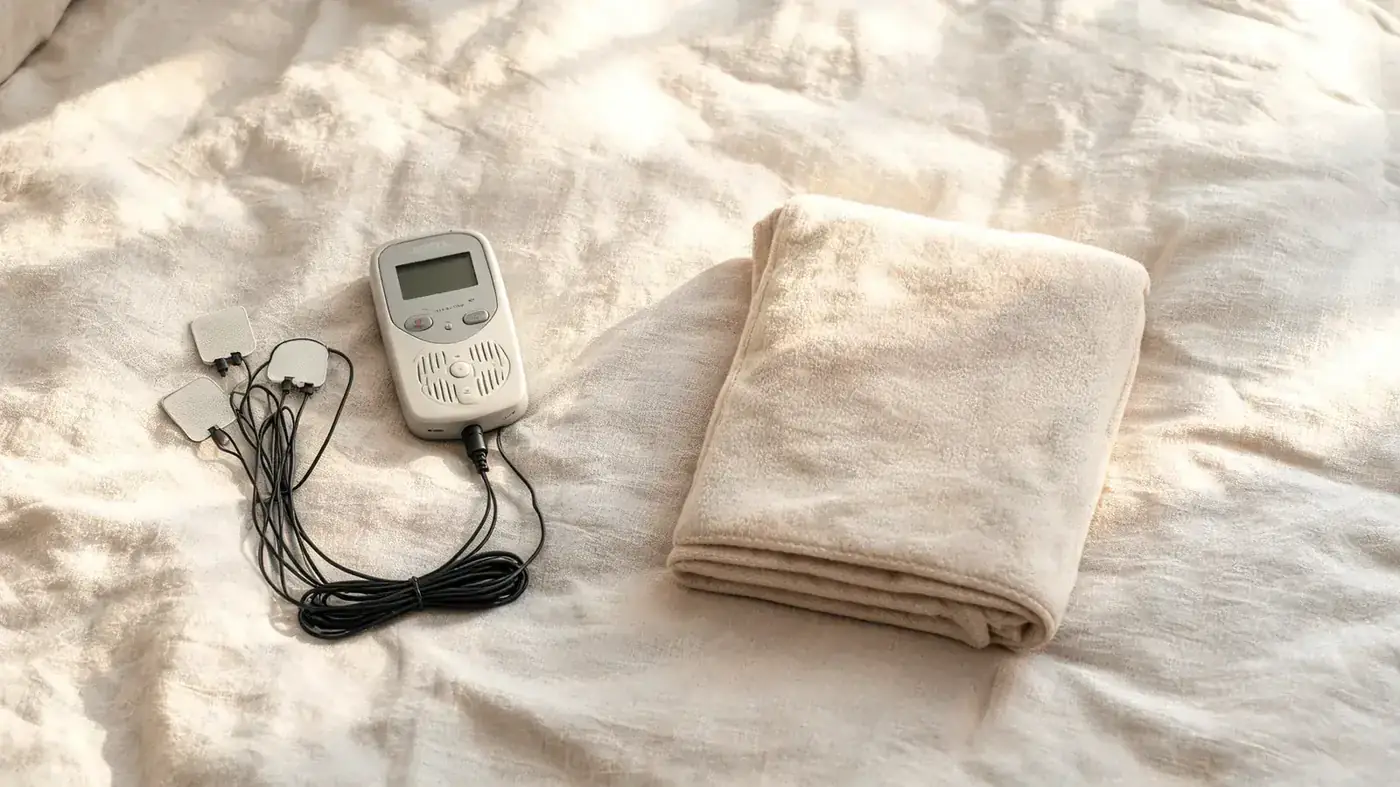
If you have inflammatory arthritis and you are under 40, you have probably been given the same two pieces of advice at some point: try heat, and try ice. Heat usually means a heating pad. It is warm, it is familiar, and it has been sitting in pharmacy aisles since before you were born. But there is another option that works through a completely different pathway, one that most people in their twenties and thirties with psoriatic arthritis, RA, or EDS have never tried. A TENS unit uses low-level electrical pulses to interrupt pain signals before they reach your brain. The AUVON Dual Channel TENS Unit does exactly that, in a device that fits in a jacket pocket and costs about the same as a Sunbeam-style heating pad. This comparison is for people who want to understand the actual difference, not just which one feels good.
The short answer: both tools have a place. But for on-demand, portable, mid-flare pain interruption, a TENS unit wins in almost every scenario that matters to young active people managing chronic joint pain day to day. A heating pad remains useful for one specific job: loosening up stiff joints in the morning before you get moving. Everything else, the TENS unit handles better.
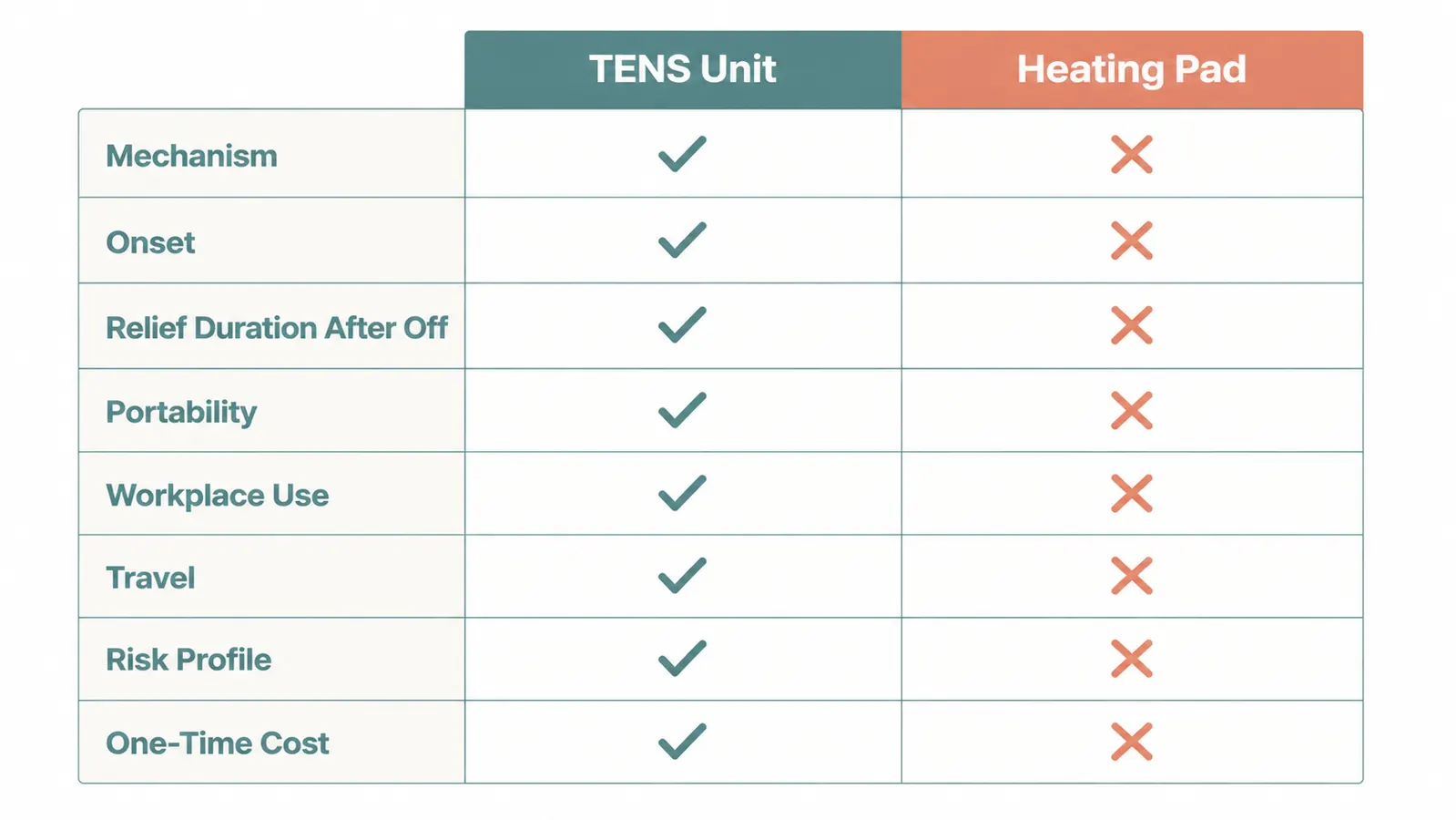
| AUVON TENS Unit | Infrared Heating Pad | |
|---|---|---|
| Mechanism | Electrical nerve stimulation via gate-control theory plus endorphin release | Thermal vasodilation, increases blood flow and relaxes surrounding muscle |
| Pain Onset | Noticeable effect within 1 to 2 minutes of starting a session | 5 to 10 minutes to warm the tissue enough to feel relief |
| Relief After Turning Off | 30 to 60 minutes of residual relief from endorphin release | Reverts to baseline pain within a few minutes of removing the pad |
| Portability | Pocket-sized, rechargeable via USB, no outlet needed | Requires an AC outlet; battery-powered versions have poor battery life |
| Workplace Use | Clips to belt under a shirt; completely invisible at a desk or on the floor | Needs an outlet at your desk; visible cord and bulk make it obvious |
| Travel | Fits in carry-on; TSA-friendly; works on any voltage with USB charging | Bulky in a bag; standard heating pads may not work on foreign voltage |
| Risk Profile | Contraindicated near pacemakers, on broken skin, or on abdomen during pregnancy | Burn risk if used on high settings or fallen asleep on; lower systemic risk |
| One-Time Cost | Moderate cost, includes 12 pads and recharges via USB indefinitely | Affordable upfront, but adds to your electricity bill over months of daily use |
Mid-flare and nowhere near an outlet? The AUVON TENS Unit clips to your belt and starts working in under two minutes.
24 modes, dual channels, 12 included pads, USB rechargeable. Currently rated 4.6 stars across nearly 14,000 reviews.
Amazon Check Today's Price on Amazon → →How These Two Tools Actually Work
A heating pad does what it sounds like. It warms the skin and the tissue beneath it, which triggers vasodilation, meaning your blood vessels widen and circulation increases. That extra blood flow can relax cramped muscles, ease morning stiffness, and take the edge off aching joints. It feels good because it is genuinely doing something helpful, at least while the heat is on.
A TENS unit works at the nervous system level. The low-voltage pulses it sends through the electrode pads interfere with the pain signals traveling toward your brain, which is the core of gate-control theory, first described in the 1960s by Melzack and Wall. The electrical input essentially jams the pain channel. On top of that, sustained TENS stimulation triggers a release of endorphins, your body's natural pain-modulating compounds. This is why the relief from a TENS session often lingers for 30 to 60 minutes after you have turned the device off, which heat simply does not do. The moment you pull the heating pad away, your tissue cools and pain signals resume at close to their previous intensity.
For someone with inflammatory arthritis, this distinction matters a lot. Inflammatory joint pain is not just tight muscle. It is nerve-transmitted pain from inflamed synovial tissue, bone erosion, or nerve root irritation at a nearby joint. A TENS unit speaks directly to that nerve pathway. Heat addresses the periphery.
Where a TENS Unit Wins for Young Arthritis Patients
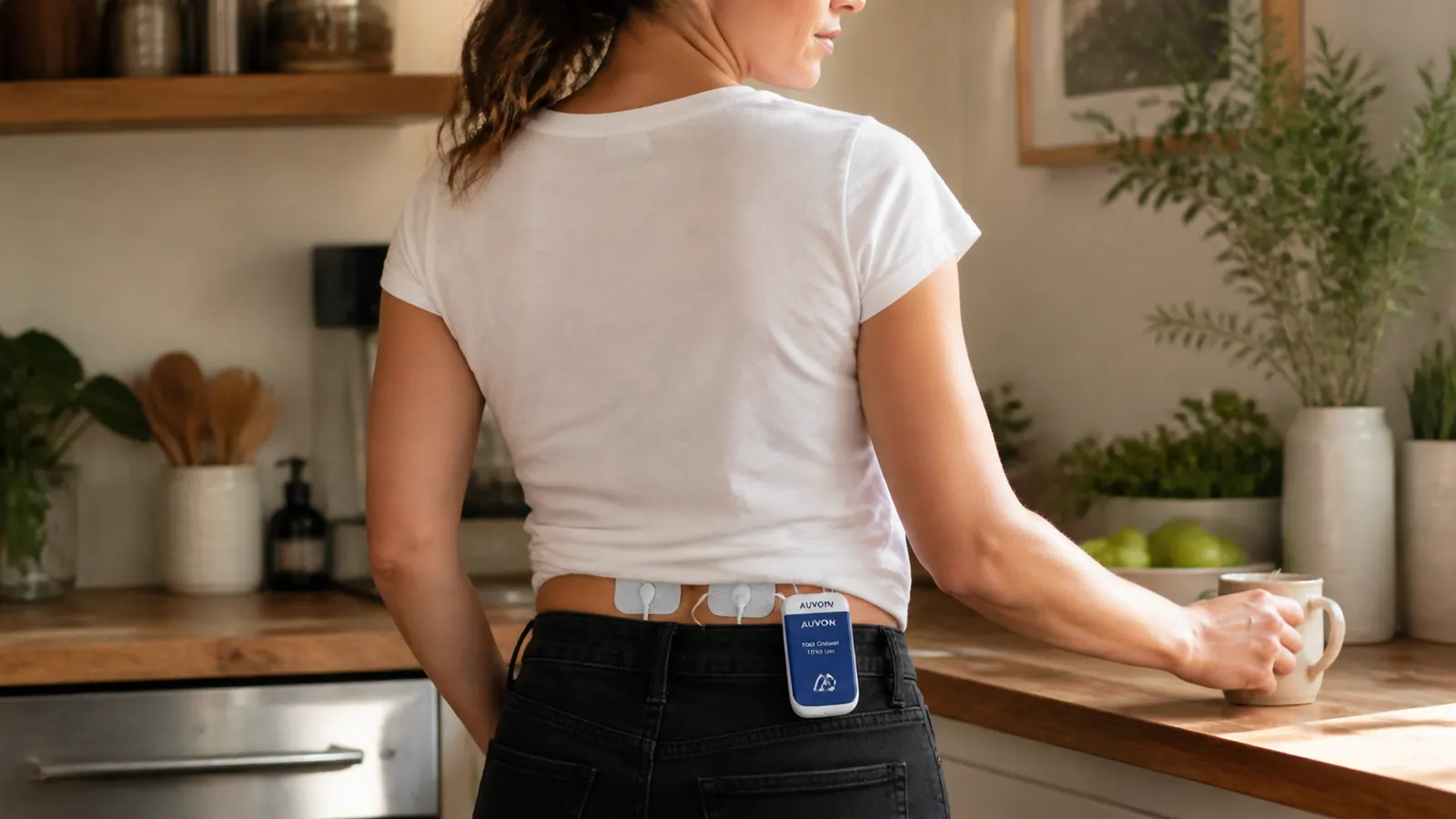
Portability is the clearest win. If you are 31 and managing psoriatic arthritis of the sacroiliac joint, you cannot sit at your desk with a heating pad draped across your lower back without everyone in the open-plan office knowing exactly what is happening. The AUVON TENS unit slips into a pocket. The electrode pads attach directly to skin and stay flat under a shirt. The device clips to a waistband or fits in a jacket pocket. Nobody in the next office can see it. You can run a 20-minute session through a morning standup meeting.
The duration of relief is the other major practical win. When you have a nerve-radiating flare in your wrist from RA, a session on the TENS unit does not just suppress pain while the pads are on. The endorphin effect extends the window of relief forward in time, which means you can use it at 8 a.m. and still be functioning better at 9:30 a.m. than you would be with a heating pad that you have to keep plugged in to feel any benefit.
Travel is the other scenario where the TENS unit is simply in a different category. A standard heating pad is bulky, adds weight to a bag, and may not work on European or Asian voltage without an adapter. The AUVON TENS unit charges via USB, weighs almost nothing, and fits in the toiletry pouch of a carry-on. For anyone with inflammatory arthritis who already deals with the physical burden of travel, this matters.
The moment you pull the heating pad away, the pain comes back. A TENS session gives you 30 to 60 minutes of residual relief after you turn it off, because endorphins do not switch off like a circuit.
Where a Heating Pad Still Has a Role
I am not going to tell you to throw out your heating pad. For one specific use case, it is genuinely the better tool: morning stiffness. If you wake up with hands, hips, or knees that feel like they were poured into concrete overnight, and you need to get them moving again before you can get dressed, gentle warmth to those joints is the right first intervention. Heat promotes blood flow, loosens the connective tissue, and makes the early range-of-motion exercises that your physical therapist recommended actually possible to perform without wanting to cry.
Heat also has a legitimate role in the wind-down before sleep. A warm pad on an inflamed joint before bed can help relax the surrounding musculature and make it easier to settle into a comfortable position. If you fall asleep with it on, though, most heating pads will auto-shutoff after 90 minutes to 2 hours; this is a safety feature you should not bypass. Burn injuries from heating pads left on skin for extended periods are real, and nerve-damaged skin from certain autoimmune conditions may not register the discomfort until damage has already occurred.
Stacking Both Tools in a Daily Routine
The most effective approach is not choosing one over the other permanently. It is knowing which tool to reach for at which point in the day. A reasonable routine for someone with active inflammatory arthritis might look like this: heating pad for 10 to 15 minutes on affected joints first thing in the morning while you are still in bed, then movement, then TENS unit for a 20-minute session mid-morning if pain is building, then TENS again in the early afternoon if you are desk-bound and feeling the nerve-radiating ache come back. Neither tool interacts with the medications most young arthritis patients are on, so layering them into a day around your methotrexate or biologic schedule is straightforward.
The TENS unit does have contraindications worth knowing. Do not use it if you have a pacemaker or any other implanted electrical device. Do not place the pads directly over broken or irritated skin, which can happen with psoriatic arthritis skin involvement. Do not use it on the abdomen during pregnancy. For everyone else with garden-variety RA, EDS joint pain, or post-injury arthritis, there are no known drug interactions and no meaningful systemic risk at the intensities consumer TENS units operate at.
Pros
- Portable and rechargeable, no outlet or power bank needed
- Pain relief persists 30 to 60 minutes after session ends
- Completely invisible under clothing at work or in public
- 24 modes let you find what actually works for your pain type
- Dual channels treat two separate areas simultaneously
- No drug interactions, safe to use alongside most arthritis medications
- One-time cost with no ongoing electricity expense
Cons
- Learning curve to find the right mode, intensity, and pad placement
- Electrode pads wear out and need periodic replacement
- Contraindicated for pacemaker users and near implanted devices
- Not a substitute for a rheumatologist-guided treatment plan
- Results vary by individual; some pain types respond better than others
Who Should Buy the TENS Unit vs Who Should Keep the Heating Pad
This is the practical decision-making section. Both tools are cheap enough that owning both is not an unreasonable choice. But if you are deciding where to spend your budget first, here is the honest breakdown based on what we know about how each tool works.
Who Should Buy
For the majority of young adults with inflammatory arthritis who asked this question hoping to find something that actually helps during the workday, during travel, or during a mid-afternoon flare spike, the TENS unit is the better daily-driver tool. The heating pad remains a genuinely useful morning ritual. These are complementary, not mutually exclusive. But if the budget is limited and the question is which one to buy first, the AUVON TENS unit is the answer.
Tried the heating pad. Still in pain. The AUVON TENS Unit is the tool most young arthritis patients try next and never put back in the drawer.
Rechargeable, 24 modes, pocket-sized, invisible under clothes. 4.6 stars from 13,813 verified buyers. Ships fast via Amazon.
Amazon Check Today's Price on Amazon → →