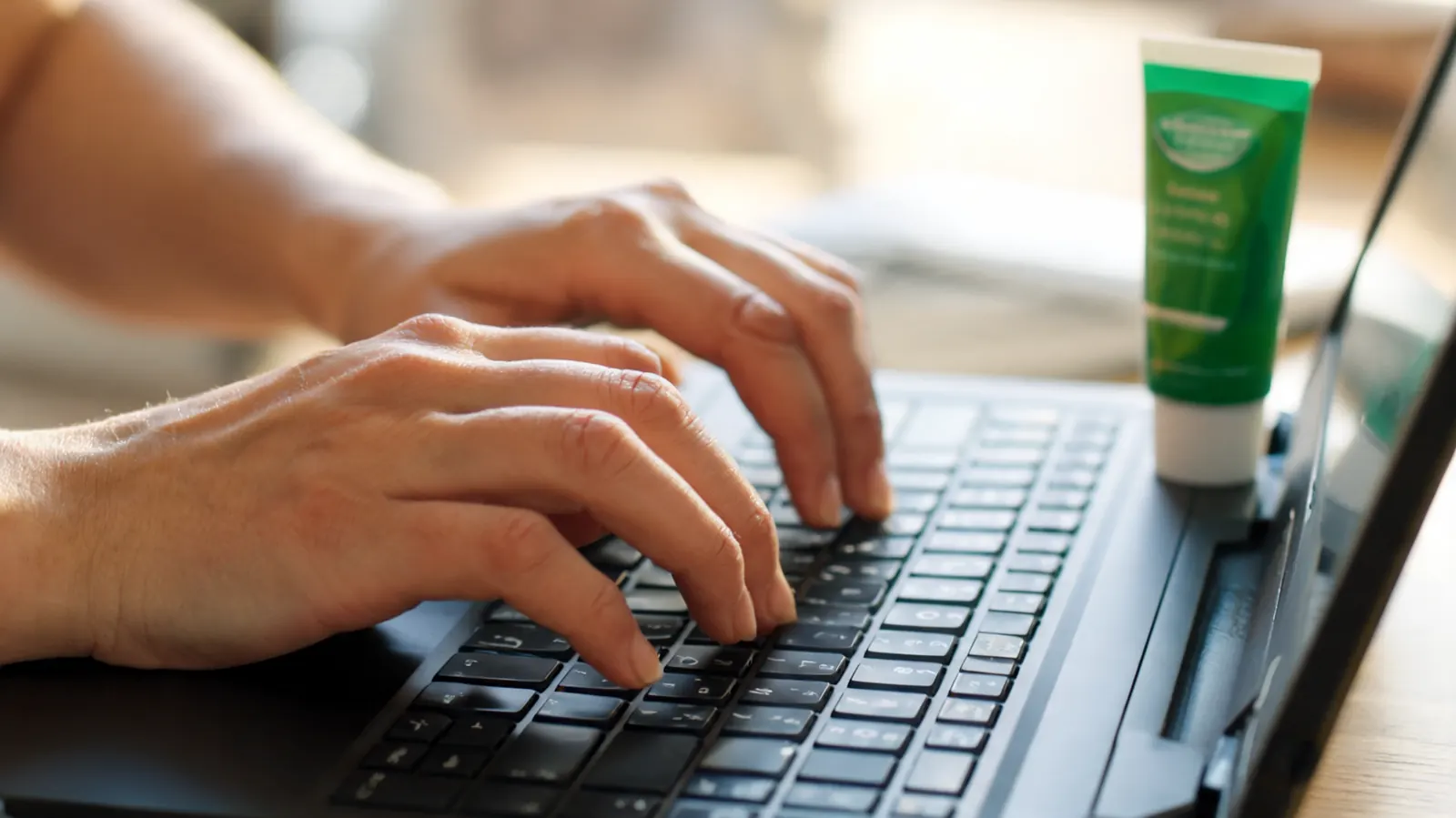

It was a Wednesday. I know because Wednesdays are my standing one-on-one with my manager, and I spent the whole morning dreading whether I would be able to type fast enough to look like I was paying attention. I was 27. I had been diagnosed with rheumatoid arthritis eight months earlier, and I was still in the phase where every flare felt like the first one. Both hands had woken up in fists, knuckles hot and swollen, fingers that would not straighten without negotiating with them for five minutes. The kind of morning where opening the bathroom door requires two hands and your full concentration. The thing that made the day survivable was a tube of Biofreeze a coworker had handed me six months earlier and forgotten about, sitting unopened in my desk drawer.
I was a year into my diagnosis and a few months into my first DMARD. My biologic had not been approved yet. I had the usual flare toolkit, except on that particular Wednesday, nothing was safe to reach for. I had already taken ibuprofen twice the day before, and my rheumatologist had been clear: with methotrexate in my system, layering NSAIDs too heavily stresses the kidneys. The methylprednisolone dose pack I had used for my last bad flare was gone. There was no miracle pill I could take at 8 AM that would fix my hands by 9.
I had a full workday ahead of me. Three video calls. A deadline. I sat at my desk and cried a little, not dramatically, just the quiet kind of crying that happens when you are 27 and your hands do not work and you have no more options to try. Then I remembered something. A coworker had given me a tube of Biofreeze about six months earlier. She had a knee that bothered her and swore by the stuff. I had dropped it in my desk drawer, slightly skeptical, slightly grateful. I had not used it once.
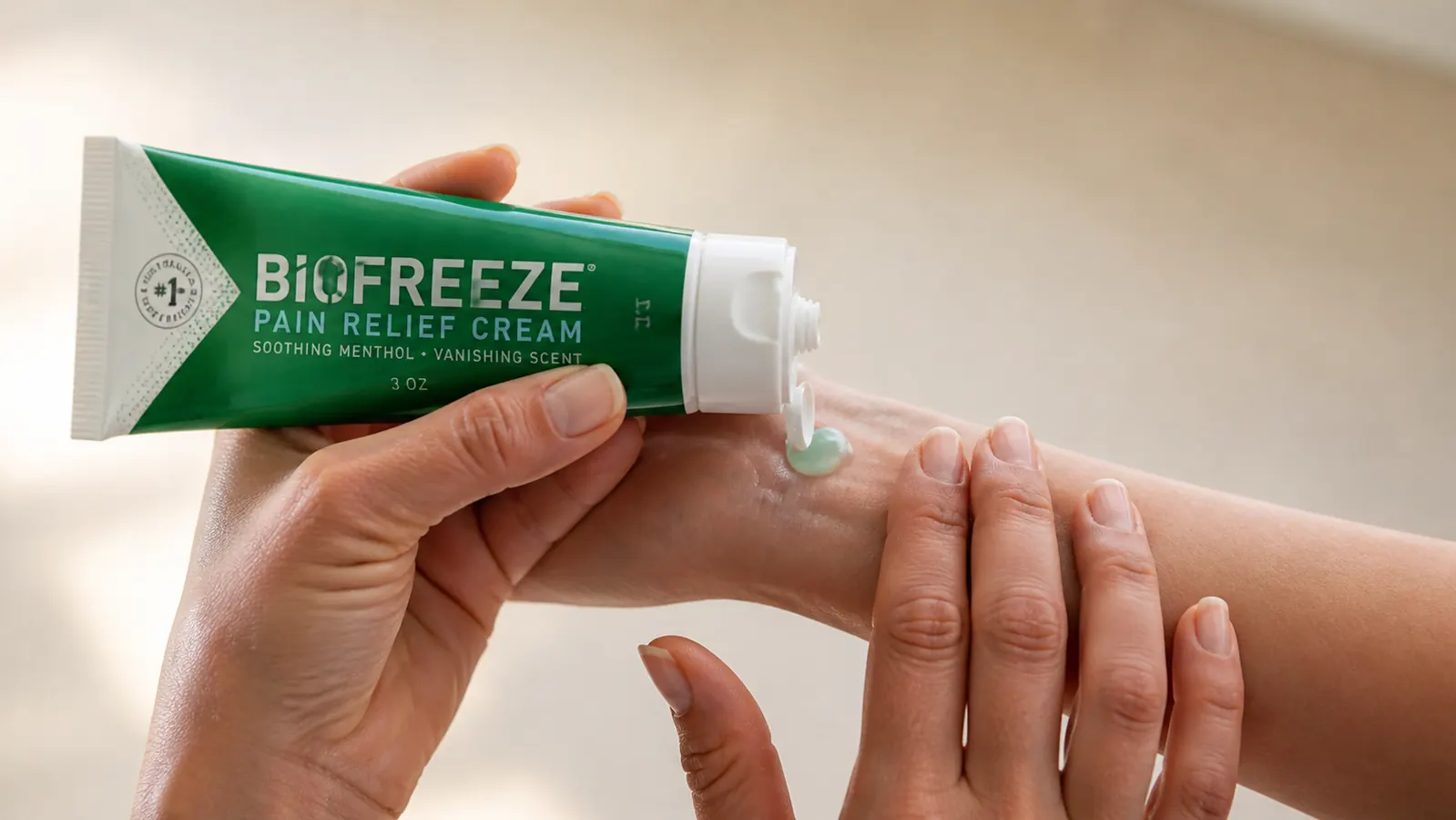
I found it under a notepad. Green tube, menthol smell, 3 oz. I read the back. No NSAID. No drug interactions listed. I applied a thin layer across both wrists at 11 AM. Not on my fingertips because they were too tender, just across the wrist joint and the base of each hand where the worst of the heat was. Then I sat very still and waited.
By 11:08 the cooling had kicked in. That sounds small. It was not small. The menthol does not fix a flare. It does something more immediately useful: it interrupts your nervous system's pain signal just enough to give you a window. A narrow window where the heat in your joints gets temporarily overridden by a cooling sensation your brain decides to pay attention to instead. I typed a three-paragraph email. It took me longer than it should have. But I typed it, and the pain was at a six instead of a nine, and that difference is everything when you have four more hours left in your workday.
The menthol does not fix a flare. It does something more immediately useful: it interrupts your nervous system's pain signal just enough to give you a window. For someone in year one of an RA diagnosis, that window is enough to get through a Wednesday.
I reapplied at 2 PM, again at 5 PM when my shift ended, and one more time at 9 PM before bed. The flare did not break until late Thursday. Biofreeze did not end it. My body ended it, slowly, the way RA flares eventually end. What Biofreeze did was make the gap survivable. It gave me four small windows across two days where the pain quieted enough to function, to answer messages, to hold a fork at dinner. That is not nothing. That is actually a lot, when you are a person who lives inside a body that sometimes behaves this way.
Keep a Tube in Your Desk Before the Next Flare Finds You
Biofreeze Pain Relief Cream 3oz uses menthol cooling to interrupt joint pain signals without drug interactions. No NSAIDs. No conflict with methotrexate. Safe to apply during a flare when your other options are limited. Rated 4.6 stars across 15,000+ reviews.
Amazon Check Today's Price on Amazon → →I have since done more reading on why this works. The menthol in Biofreeze activates cold-sensitive receptors in your skin called TRPM8 channels. Those receptors compete with the pain signals your inflamed joint is sending. It is essentially the same reason rubbing your elbow after you bang it on a doorframe actually helps: you are giving your nervous system a competing sensation to process. For autoimmune arthritis, where the inflammation itself is the enemy and you cannot always medicate your way out of it quickly, a topical that works through a separate mechanism is genuinely useful. Not as a treatment. As a survival tool.
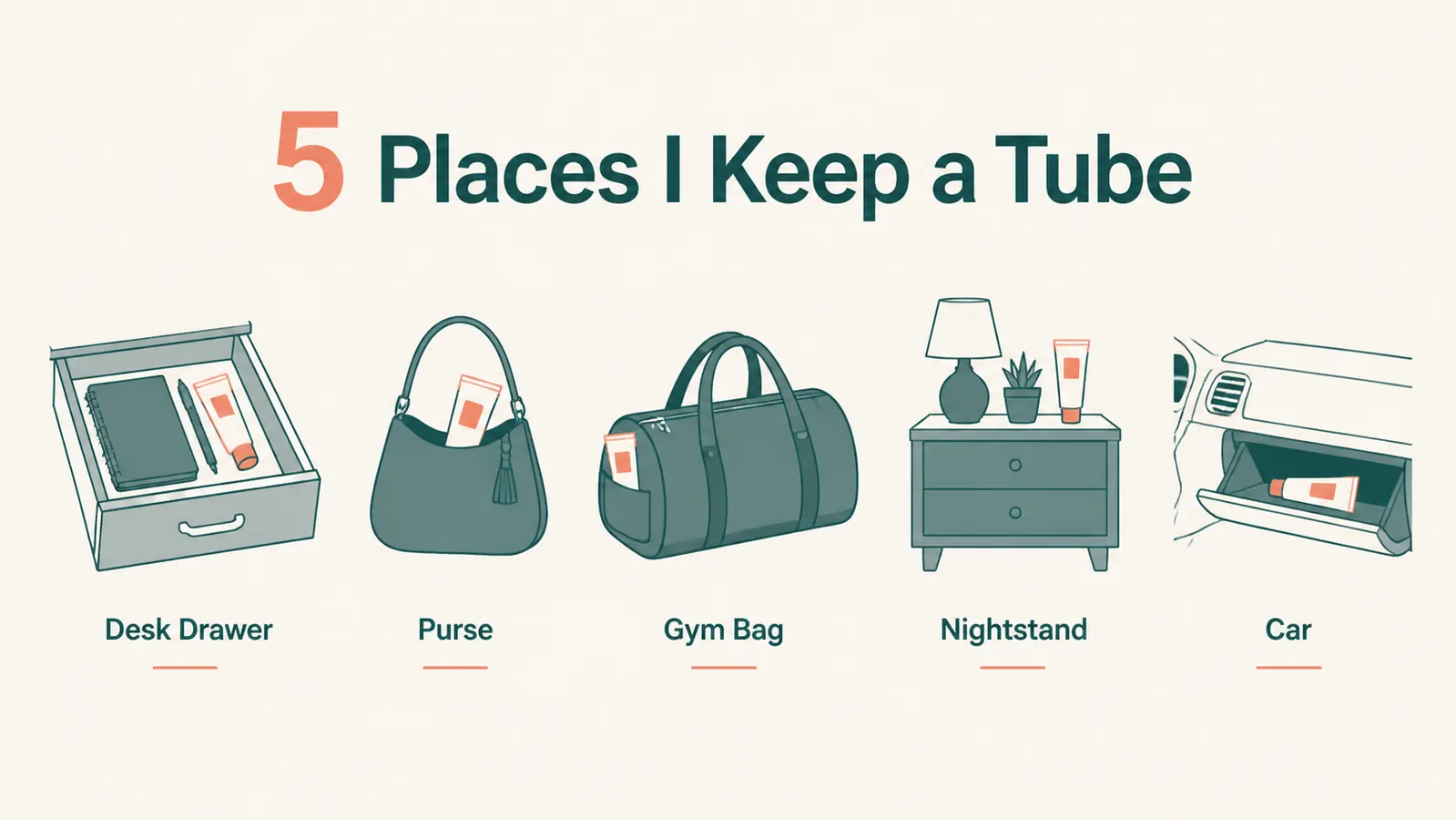
I now keep a tube in five places. Desk drawer at home. My everyday bag. My gym bag (I still go to yoga on better days). My nightstand. The glove box of my car. They are not expensive. They expire eventually, so I check them every few months and replace the ones that have dried out. That might sound excessive to someone who does not have RA. To anyone who does, I suspect you already know why you would rather have it and not need it than reach into your bag during a parking lot flare and find nothing.
I want to be clear about what Biofreeze is not. It is not a disease modifier. It does not touch the underlying inflammation the way a DMARD or a biologic does. It does not replace those. If you have RA and you are not on a treatment plan yet, please talk to a rheumatologist. Topicals are a bridge tool, a way to get through the hard hours while your actual treatment does its work over weeks and months. I have learned to hold both things at once: I take my methotrexate every Friday. I ice my hands when they swell. I see my rheumatologist four times a year. And I keep a tube of Biofreeze in my desk drawer, because some Wednesdays require more than medication and willpower.
For a longer look at how I use it day to day, my full Biofreeze review for rheumatoid arthritis pain covers five months of near-daily use, including which joints respond best and the one situation where it is not enough. And if you want a more structured breakdown of specific use cases, I wrote about 10 ways Biofreeze helps young people with chronic pain that covers scenarios from morning stiffness to pre-sleep wind-down. There is also an honest Biofreeze review that gets into what nobody tells you when your pain is autoimmune rather than athletic.
What I Would Tell You If We Were Sitting at My Kitchen Table
If you are reading this at 2 AM because your hands are stiff and hot and you are trying to figure out if there is anything you can do right now, without calling anyone, without waiting for a pharmacy to open, without risking a drug interaction: yes, Biofreeze. If you have a tube, apply it. Thin layer, affected joints, let it dry. Give it eight minutes. It is not going to fix you. But it might drop the pain from a nine to a six, and a six is the difference between lying still in the dark and actually falling asleep.
Buy a tube before the next flare. Put it somewhere you will find it when your hands are already too stiff to search. The flare will break. It always breaks. You just have to get through the hours in between.
A Tube at Your Nightstand Costs Less Than One Hour of a Flare
Biofreeze Pain Relief Cream uses menthol cooling for fast-acting topical joint pain relief. No NSAID, no drug interactions, safe alongside methotrexate and most biologics. Consistently rated 4.6 stars by real arthritis sufferers. Check current pricing below.
Amazon Check Today's Price on Amazon → →