
I have been using the AUVON Dual Channel TENS Unit on and off for about eight months now. I have chronic arthritis from an autoimmune condition, I am 30 years old, and I am not reviewing this because I tweaked something at a spin class. I bought it because my rheumatologist suggested non-pharmacological pain management options during breakthrough flares, and the price point was low enough that the risk felt manageable. Before I get to whether it works, I want to be clear about what the Amazon listing glosses over, because I spent the first three weeks figuring out things that nobody bothered to write down anywhere useful.
If you are looking for the long-term usage timeline and what changed in my pain levels month by month, my other review covers that in detail. This one is for everyone who opened the box, stared at the manual, and immediately went to YouTube because the instructions read like they were run through three translation layers. You are not confused. The manual is just bad.
Quick Verdict
Genuinely useful for breakthrough joint pain, but the learning curve is steeper than the listing admits, the pads degrade faster than advertised, and it will not help everyone. Buy it with realistic expectations.
Amazon Check Today's Price →Still worth buying. Just go in knowing what you are actually getting.
At this price, the AUVON TENS Unit is a reasonable first TENS device for anyone with chronic joint pain. It delivers real, if temporary, relief when you use it correctly. The honest catch: it takes about two weeks to figure out what 'correctly' means for your specific pain location.
Amazon Check Today's Price on Amazon →The 24 Modes Are Mostly Marketing. You Will Use Four.
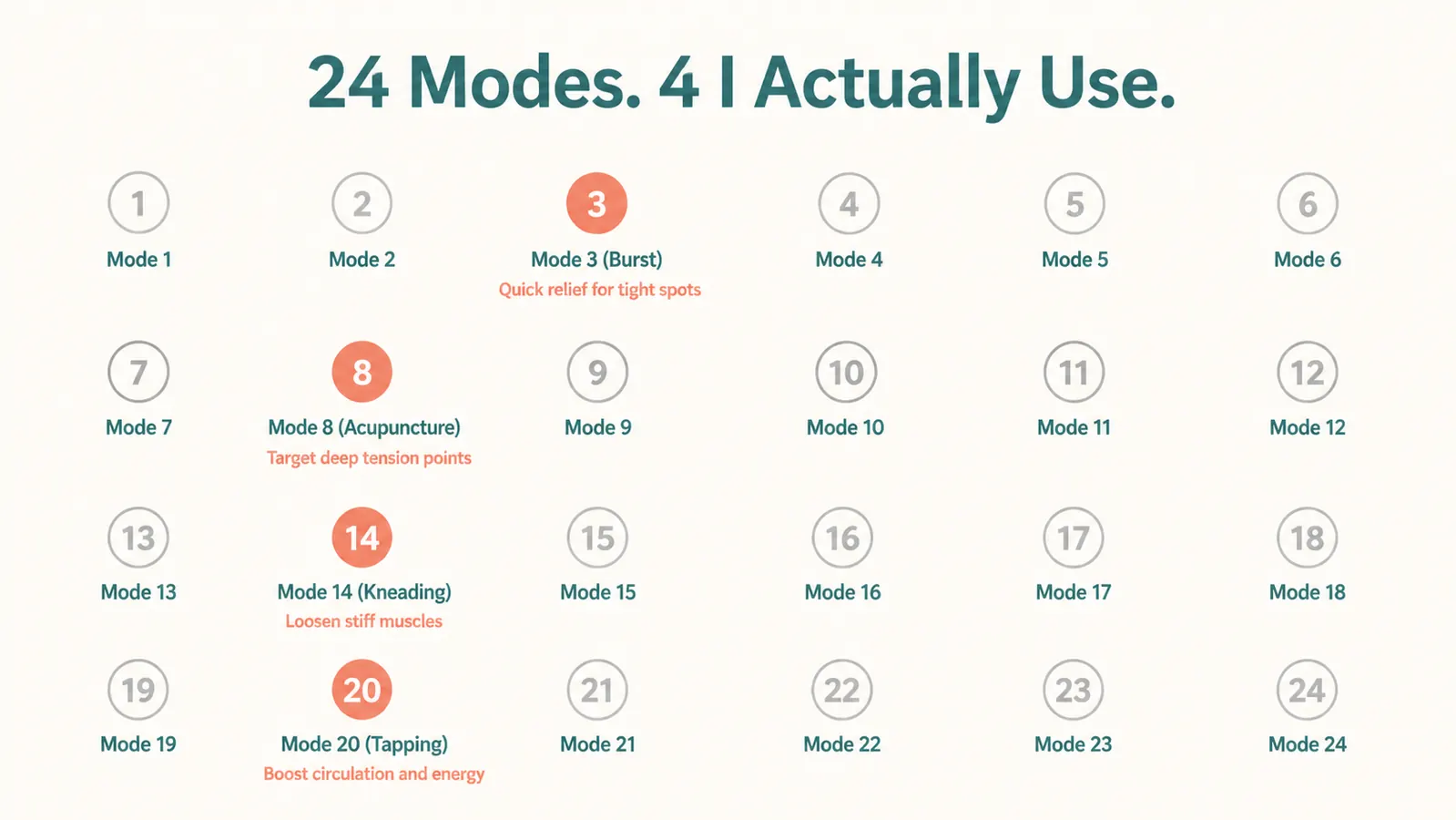
The headline feature on the listing is 24 modes, and I understand why that number looks impressive. It is not impressive. It is overwhelming, and for most people with chronic joint pain, it is irrelevant. Twenty-four modes exist partly because TENS and EMS (electrical muscle stimulation) are combined in this device, and the modes span both functions. If you have joint pain, not muscle pain, roughly half those modes do not apply to your situation at all. The EMS modes are designed to contract and fatigue muscles. That is the opposite of what most people with inflamed joints need.
After eight months, I reliably use four modes: a burst pattern for general pain dulling during a flare, an acupuncture-style mode that gives a rhythmic deep pulse I find useful for my wrists, a kneading pattern for the hips, and a tapping mode that I use before sleep to calm down the buzzing sensation in my ankles. Everything else I have tried once, found either irrelevant or uncomfortable, and moved on. If you are buying this because of the 24-mode count, do not. Buy it because it has the four or five modes that actually work for chronic pain, and those modes work well.
The Electrode Pads Lose Stickiness Around 30 Uses, Not 100
This one bothers me the most, because it affects the ongoing cost of using the device and nobody says it clearly. The listing implies the included pads last a long time. They do not. In my experience, meaningful adhesion degrades around the 25-to-30-use mark. The pads do not fall off immediately, but they stop making good skin contact, and poor contact means the current distributes unevenly. Uneven distribution produces sharp, uncomfortable sensation instead of the broad, buzzy feeling you are going for. If a session suddenly feels more like electric pinching than gentle stimulation, the pads are probably worn out.
You can extend pad life somewhat by cleaning the skin before each use and storing the pads on their plastic backing with a tiny splash of distilled water to rehydrate the gel. But budget for replacement pads from the start. Compatible pads are not expensive, roughly a modest cost for a pack of eight to twelve, but it is a recurring cost the listing does not flag. I go through about two packs every three months with regular use.
If a session suddenly feels like electric pinching instead of gentle stimulation, your pads are probably worn out, not your pain. Replace them before you give up on the device.
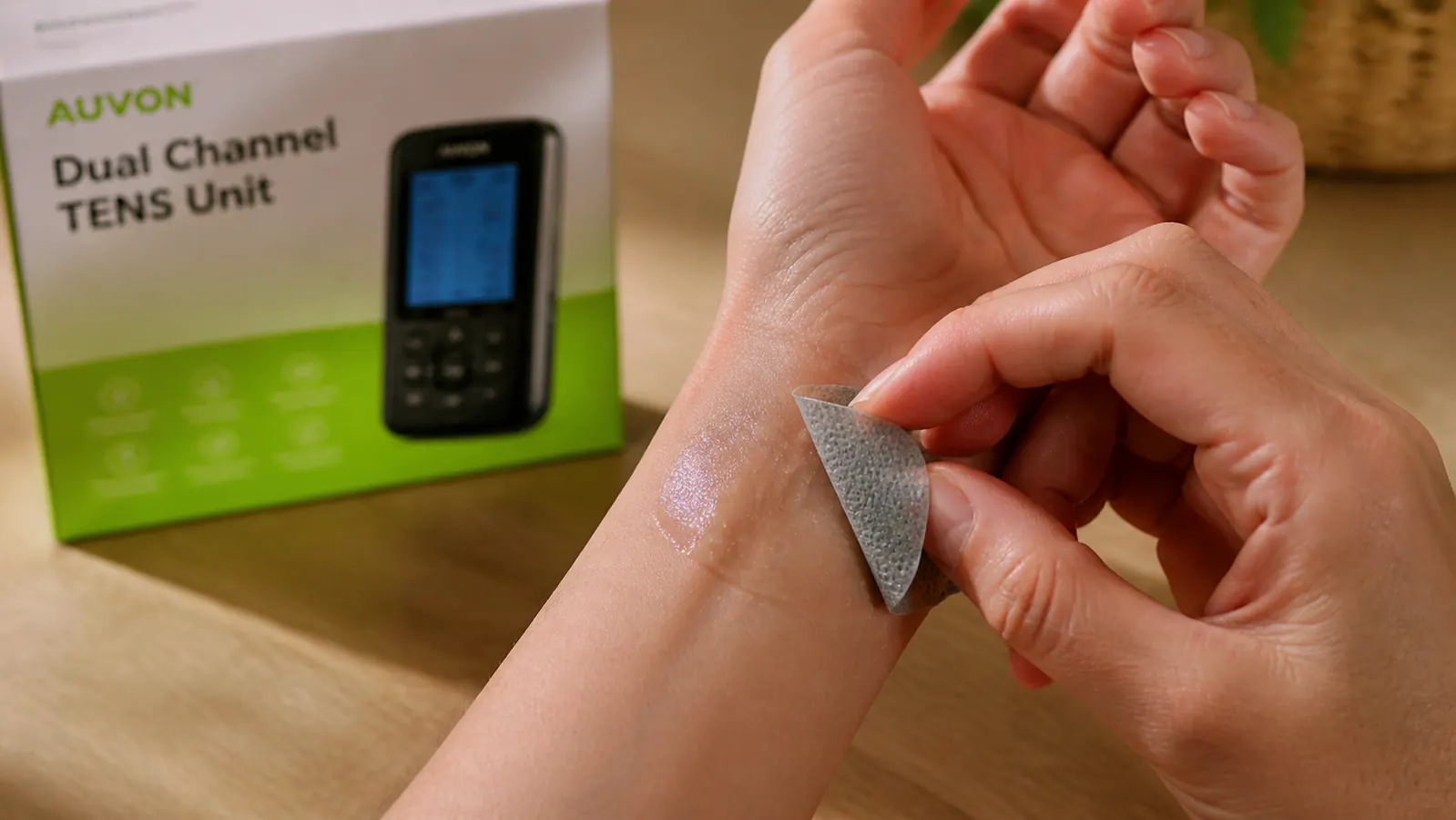
The Manual Is Genuinely Unhelpful. Go Straight to YouTube.
The included instruction booklet reads like it was translated from Chinese to English by someone who knows both languages but not medical device writing conventions. The pad placement diagrams are small, anatomically imprecise, and labeled with terms that do not map clearly to the mode descriptions. I spent twenty minutes trying to understand what 'use diagram J for lower extremity joint' meant. There is no diagram J. There are diagrams A through F.
Search YouTube for 'TENS unit pad placement arthritis' and then the specific joint you are targeting. There are physical therapists and occupational therapists who have posted clear, accurate videos on this, and fifteen minutes of video will give you more usable information than the entire manual. The device itself is fine. The documentation around it is not. Do not judge the product by the paperwork.
Things This Device Will Not Help. Be Honest With Yourself About Which Category You Are In.
TENS works by sending low-voltage electrical pulses through the skin to interfere with pain signals traveling to the brain. The gate-control theory of pain is real, and the research supporting TENS for musculoskeletal joint pain is reasonably solid. But TENS does not work for every type of pain, and several groups of people consistently report little to no benefit.
If your primary pain is radicular nerve pain, meaning sciatica that shoots down your leg, post-shingles nerve pain along a dermatome, or the deep central sensitization that characterizes severe fibromyalgia, surface electrode TENS is unlikely to touch it. The pain pathways involved are different. Similarly, if your arthritis is currently in an active severe flare with visible swelling and heat, TENS can feel useful for the surrounding muscle tension but will not address the inflammatory process in the joint itself. TENS is not an anti-inflammatory. It does not replace your DMARD or biologic. It is a breakthrough pain tool, useful for the pain on top of your baseline, not for resetting the underlying disease activity.
People who get the most consistent relief from TENS tend to have localized musculoskeletal joint pain that is stable or sub-acute, not in active inflammatory crisis. If you are mid-flare with a hot swollen joint, call your rheumatologist. If you are at a four-out-of-ten with the familiar deep ache that never fully goes away, TENS is worth trying.
The Usability Problems Nobody Mentions in One-Star Reviews
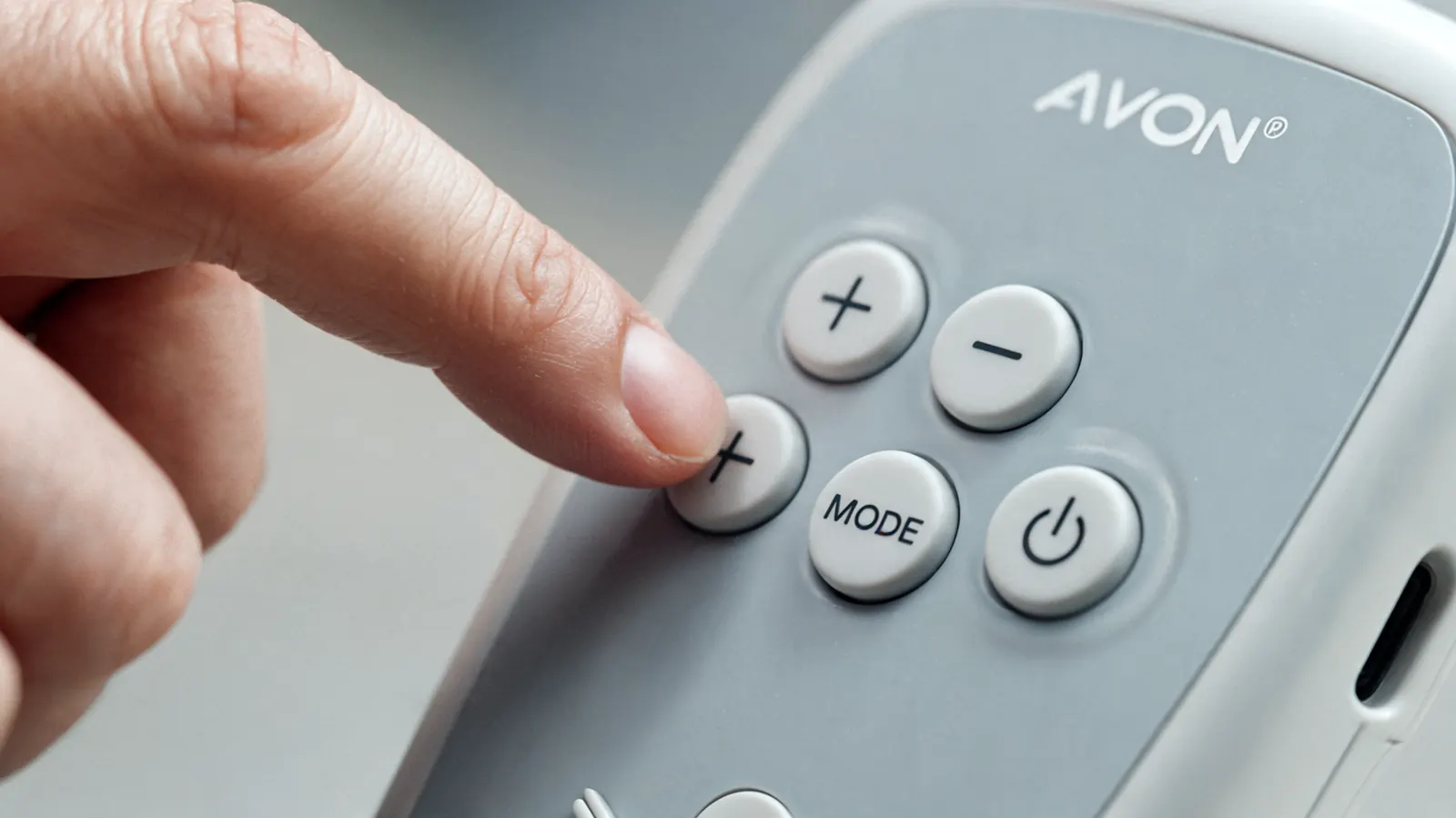
Here is an irony that did not occur to me until the third or fourth time I struggled with it: a device designed for joint pain has buttons that are genuinely difficult to use if your hands are affected by arthritis. The control panel buttons are small, slightly recessed, and require a fairly firm press to register. During a flare when my finger joints are at their worst, operating this device is frustrating. I have learned to keep the device within reach when my hands are having a better day and do my session setup then, and to avoid trying to adjust settings mid-session when my hands are flared.
The charging situation is also worth knowing. This device uses a USB-mini cable, which is an older connector type that most people stopped carrying around five years ago. It does not use USB-C. If you have recently upgraded your electronics, you may not have a USB-mini cable on hand. Include one in your first order or check your cable drawer before assuming you can charge it immediately out of the box.
The 30-minute auto-shutoff is annoying on first encounter. You are in the middle of a session, starting to feel genuine relief, and the device simply stops. It feels like a flaw. It is actually a reasonable safety design, because your nervous system adapts to TENS stimulation quickly and continued use past 30 minutes provides diminishing returns while increasing the chance of skin irritation under the electrodes. Let it shut off. Wait 20 minutes if you want a second session. Do not tape the button down to keep it running.
Why You Might Not Feel Anything Your First Time (and What to Check)
A surprisingly common first-use experience is turning it on and feeling absolutely nothing. Before concluding the device is defective or that TENS just does not work for you, check these things in order. First, check that the lead wires are fully seated in both the device port and the pad connectors. They click in more firmly than you expect and a partial connection produces no sensation. Second, check that the pads are applied with the textured gel side down against your skin, not the smooth backing side up. This sounds obvious but the first time I handed the device to my partner to help me with my back, she put them on backward. Third, check that the intensity is actually turned up. The default starting intensity on this device is low enough that many users, especially those with any nerve involvement reducing skin sensitivity, feel nothing at all. Turn it up until you feel something, then back it off one or two notches to a comfortable level.
One more thing: do not apply pads over skin where you have recently used Voltaren gel or Biofreeze. Any greasy or oily topical product on the skin breaks the electrode-to-skin contact the pads need to conduct current. If you use topicals, apply them to a different joint or wait until you have completed your TENS session and washed the area. Mixing them on the same skin patch produces poor conduction and inconsistent sensation.
Safety Points Worth Reading Before You Skip to the Amazon Listing
The AUVON TENS Unit is classified as a wellness device, not an FDA-cleared medical device for the management of chronic pain. That distinction matters if you are comparing it to clinical TENS units prescribed or administered in a physical therapy setting, which operate under different parameters and with professional pad placement. This unit is appropriate for home use for general pain management, but it has not gone through FDA 510(k) clearance as a treatment for a specific chronic condition. Know what you are buying.
The contraindications matter. Do not use TENS if you have a pacemaker or any implanted cardiac device. Do not use it during pregnancy. Do not apply pads over broken, irritated, or recently sunburned skin, over your throat or chest directly, or across your head or face. Do not use it while sleeping. Prolonged electrode contact against skin during sleep is a real risk for localized burns even at low intensity settings. And do not use it while driving or operating any machinery. These are not liability disclaimers you can skip. The pacemaker contraindication in particular is absolute.
Pros
- Genuinely reduces breakthrough joint pain when used correctly on the right pain types
- Rechargeable battery lasts several sessions before needing a charge
- Dual channel lets you treat two joint sites simultaneously
- Quiet and discreet enough to use at a desk or on the couch during normal activities
- Replacement pads are widely available and inexpensive
Cons
- 24-mode count is mostly marketing noise; roughly 4 to 6 modes are useful for joint pain
- Electrode pads lose adhesion around 25 to 30 uses, not the extended lifespan the listing implies
- Instruction manual is poorly translated and not practically useful for pad placement
- USB-mini charging connector is an outdated standard most people no longer have cables for
- Control buttons are small and hard to operate during a hand or finger flare
- Will not help with radicular nerve pain, severe fibromyalgia central sensitization, or active inflammatory joint crises
- Not FDA-cleared as a medical device for chronic pain management
- 30-minute auto-shutoff can feel abrupt mid-session
Who This Is For
You will get the most from this device if you have chronic but stable-ish joint pain from arthritis, your hand joints are not your primary affected area (or you have good days where you can manage the controls), you are looking for something to reduce NSAID reliance on moderate pain days, and you are willing to spend a couple of weeks learning which modes and pad placements work for your specific pain locations. If you have read everything in this review and you recognize your situation in the realistic use case, this is a good value for the price. The 13,000-plus Amazon reviews are not fabricated. It works. It just works for a specific type of pain in a specific way that the listing does not fully explain.
For more on what the long-term experience actually looks like month by month, read the full long-term AUVON TENS unit review. For practical ideas on where TENS fits into a broader arthritis pain management routine, 10 ways a TENS unit helps young people with arthritis is worth a look.
Who Should Skip It
If your pain is primarily radicular, post-surgical, or originates from central nervous system sensitization rather than peripheral joint inflammation, the evidence for TENS helping you is weak. If you have a pacemaker or are pregnant, do not buy it at all. If your hands are your most affected joints and they are frequently in active flare, the usability problems with the buttons will be a real ongoing frustration. And if you are hoping this replaces your rheumatology care, your medications, or the physical therapy your PT has recommended, it does not. It is a useful addition to a pain management toolkit. It is not a standalone solution.
Lower your expectations from the listing. Raise them from this review.
The AUVON TENS Unit is a solid home TENS device at a fair price. Budget for replacement pads, find a YouTube tutorial for your specific joint, and start with the burst or acupuncture mode before experimenting further. Most people who use it correctly find it earns a regular spot in their routine.
Amazon Check Today's Price on Amazon →