 Best For Joints
Every morning it was the same ritual. Before I even tried to get out of bed, I would lie there cataloging which joints were going to cooperate and which were going to make me pay for the audacity of getting vertical. Both hands. Both knees. My left hip, always the worst in the first ten minutes.
I had been living with osteoarthritis for six years at that point. I knew what morning stiffness was. What I did not understand was why it was always worst in the morning specifically. Why not after an afternoon nap? Why not after sitting in a movie theater? There had to be a reason, and if I understood the reason, maybe I could do something about it.
The Science Behind Morning Joint Stiffness
It turns out there are three distinct mechanisms that converge every night to make your mornings miserable. Understanding each one changed how I thought about managing this.
1. Synovial Fluid Redistribution
Synovial fluid is the viscous, lubricating fluid inside your joint capsules. During the day, when you move, this fluid circulates and distributes evenly through the joint space. During sleep, especially prolonged stillness, the fluid pools and becomes more viscous. When you wake and try to move, the joints are essentially running on thickened, unevenly distributed lubricant. That first ten minutes of stiffness is partially your body redistributing and warming that synovial fluid back to normal consistency.
2. Nighttime Inflammation Accumulation
In rheumatoid arthritis and other inflammatory arthritis types, inflammatory cytokines (chemical messengers that promote inflammation) follow a circadian rhythm. Levels of IL-6 and TNF-alpha, two major pro-inflammatory cytokines, peak in the early morning hours, typically between 2 and 4 AM. By the time you wake, you are moving joints that have been marinating in peak inflammation levels for hours. This is why RA in particular tends to cause the most severe morning stiffness.
3. Cortisol Timing
Cortisol, your body's natural anti-inflammatory hormone, follows a circadian pattern that reaches its lowest point around midnight and rises sharply in the early morning, typically peaking around 8 to 9 AM. The problem is that when you first wake, usually between 6 and 7 AM for most people, cortisol has started rising but has not yet reached its anti-inflammatory peak. You are in the gap between maximum inflammation (middle of the night) and maximum cortisol response. Joints feel the difference.
What Actually Helps Morning Stiffness
Understanding the mechanism points directly to solutions: support the body's natural anti-inflammatory response, improve joint lubrication from the inside, and use strategic morning heat therapy. Performance Lab Flex addresses the first two.
See Performance Lab FlexWhat I Changed (And What Actually Worked)
Armed with this understanding, I made four changes to my routine over about six months. I tracked morning stiffness on a 1-10 scale the whole time.
Evening Supplement Timing
I moved my glucosamine and chondroitin dose to evening rather than morning. The logic: if inflammation peaks between 2 and 4 AM, having the anti-inflammatory compounds in my system at that time, not hours after I woke up, made more sense. My rheumatologist agreed the timing adjustment was reasonable. My average morning stiffness score dropped from 7.1 to 5.8 over the first month.
Pre-Rise Micro-Movement
Rather than standing up immediately, I started spending five minutes doing gentle ankle circles, knee bends, and hand flexion while still in bed. The goal was to start circulating that viscous synovial fluid before I put full body weight through the joints. This sounds simple to the point of being dismissible. It made a noticeable difference.
Infrared Heat Before Getting Up
I started using a Therasage infrared heating pad on my worst joints for ten minutes while still in bed. Infrared penetrates about 2 to 3 inches into tissue, warming not just the surface but the joint capsule itself. It is meaningfully more effective than a regular heating pad for joint stiffness. Cost-benefit wise, it was one of the best investments I made.
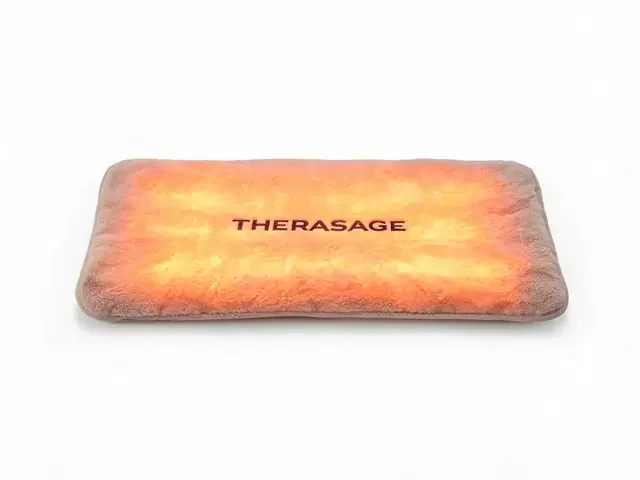
Therasage Infrared Heating Pad
Near-infrared wavelengths penetrate 2-3 inches into tissue, warming joint capsules rather than just surface skin. Significantly more effective than standard heating pads for morning stiffness.
See Therasage OptionsSupportive Footwear Ready at Bedside
Those first steps on cold floors in bare feet were punishment. I put Orthofeet therapeutic slippers directly next to my bed so I stepped into them immediately upon standing. The cushioning and arch support reduced the shock of first contact significantly. For morning plantar and ankle joint pain, this was one of the most immediately effective changes.
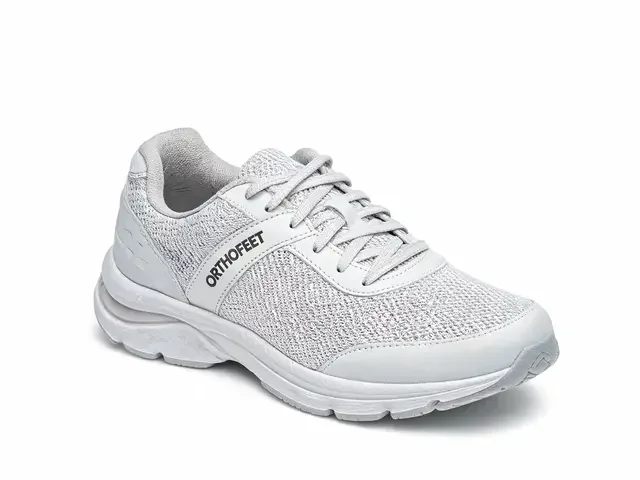
Orthofeet Therapeutic Footwear
Orthopedic cushioning and arch support designed specifically for arthritis-related foot pain. Available in slippers and shoes. One of the first things I reach for in the morning.
See Orthofeet OptionsWhat Did Not Help (So You Do Not Waste Time)
NSAIDs at bedtime: My doctor discouraged this for long-term use given GI and cardiovascular risks. Short-term use during bad flares, supervised.
Elaborate morning stretching routines: YouTube arthritis stretching videos are fine, but trying to do 15 minutes of structured exercise when you can barely move is backwards. Five minutes of gentle passive motion first. Structured exercise comes after stiffness reduces.
Sleeping with compression gear: I tried compression gloves overnight based on a recommendation. The compression restriction was uncomfortable and sleep quality suffered. The better approach was heat in the morning, not compression overnight.
The Bigger Picture
Morning stiffness is not inevitable at its current severity. It is a predictable, mechanistically understood consequence of specific biological processes, which means it is something you can actually address with targeted strategies rather than just enduring it.
The combination of supplement timing, pre-rise movement, morning infrared heat, and supportive footwear brought my average morning stiffness score from 7.1 to 4.2 over six months. Not zero. Not a cure. But a meaningful shift in how my day starts.
Start With What Helped Me Most
Of everything I tried, Performance Lab Flex timed in the evening and morning infrared heat had the most measurable impact on my morning stiffness. Both are reasonable starting points.
See Performance Lab Flex